

By Duncan Dyason MBE
The sun was beating down on us as we arrived at the Alas Project in Honduras. Inside, the air was no cooler. The electricity was out across the sector, leaving the centre sweltering and still.
The stifling heat drained our energy, but the moment the children began to arrive, faces bright with expectation, our focus shifted entirely to them. Their joy cut through the heaviness like a cool breeze.
The Alas Project was founded in 2016 by Lorena, Rita, Mey, Alejandra and Yuli, five remarkable people who began with simple street outreach and home visits. Both had years of experience walking alongside at-risk children in the town. Later, Steve and Lindsey joined them, helping to open a mentoring centre that would become a place of hope for the town’s most vulnerable and street-connected kids.
Today, the Alas Mentoring Centre stands proudly in the heart of the community. It has won the admiration of local people and forged partnerships with churches, schools, the police, and the municipal council. As I looked around the building, beautifully arranged with a kitchen, library, and creative play areas, it was clear how much love and effort the team had poured into making it a place where children feel they belong.
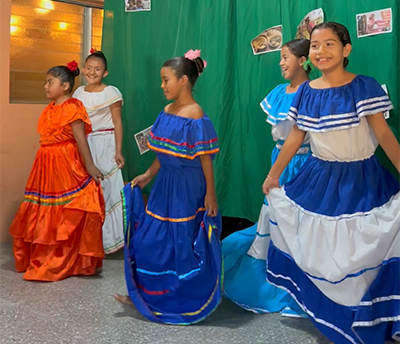
The team’s excitement was contagious. Today was the Fiesta Catracha, an annual celebration of Honduran culture and food. Some of the girls were practising their traditional dances, while others prepared colourful displays about Honduras’ diverse ethnic groups, their traditional dress, food, and customs. The highlight of the afternoon was the dances: first the younger girls, then the older ones, followed by a magnificent feast of Honduran dishes, desserts, and drinks.
As the celebration carried on, my attention was drawn to a small group outside the glass doors – a family of four children, two boys and two girls, none older than twelve. Lorena, while busy serving hot food, noticed them too and smiled warmly, beckoning them in.
The children hesitated, eyes darting nervously as they stepped inside. Their body language was one I’ve seen too often: wary, alert, unsure whether to trust the safety being offered. I reached out to them with a smile, offering a fist-bump and assuring them they were welcome. They stayed close together, glancing toward the door as if ready to bolt at the first sign of trouble.
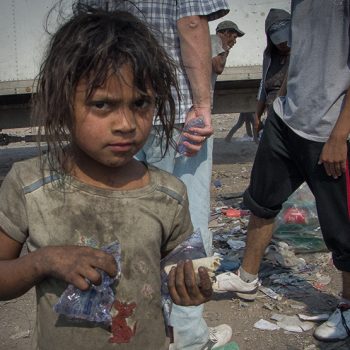
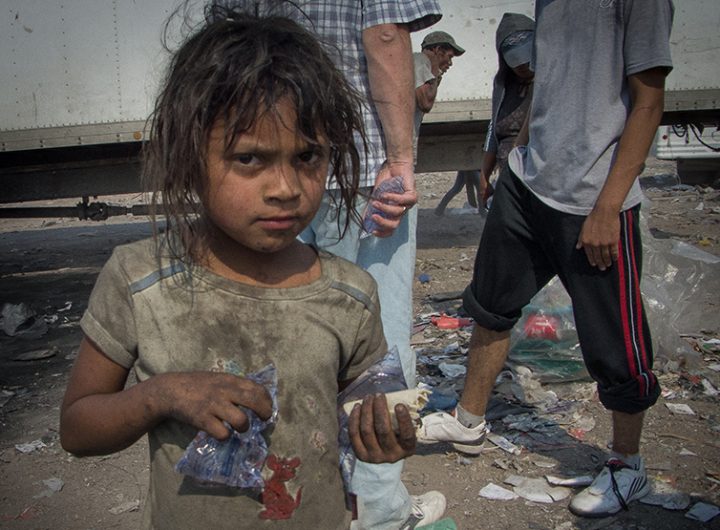
Slowly, as they watched the other children laughing and eating, their shoulders softened. They took cautious steps further into the centre. I’ll never forget the bravery of one little girl (photo above) who accepted a plate of food and whispered, “Thank you.” She wouldn’t eat until she was certain her siblings had food too.
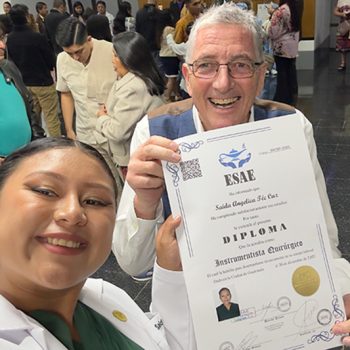
Watching her brought back a vivid memory from nearly twenty years ago, of another young girl who once came into a church for food with her brothers and sisters. She was just eight, her clothes ragged, her skin darkened by days of street life. I remember her sitting under a table, reaching up for scraps of food left above her. One of our current team members was that very girl.
The parallels were striking. The same hunger, the same fear, the same longing to be safe.
As I watched this family eat, they began scraping some leftovers onto a paper plate, food they hoped to take “home” later, even if that home was the street. My heart ached. Lorena promised to investigate and find a way to support them.
Driving back to Guatemala later the following day, my thoughts were heavy. The plight of those children, and countless others like them across Honduras, lingered in my mind. This work rarely offers neat endings. Some days, we can’t close the week with stories of safety and resolution. As soon as one family finds hope, another appears in desperate need.
Yet amid the weariness, there is light. I was deeply comforted knowing that an incredible team continues to work tirelessly to bring love, safety, and dignity to children who need it most in Honduras.
Their work, and the hope it brings, exists because of your support. Without it, I can only imagine where these children might be today.